
Why PACE Claims Need a Different Approach
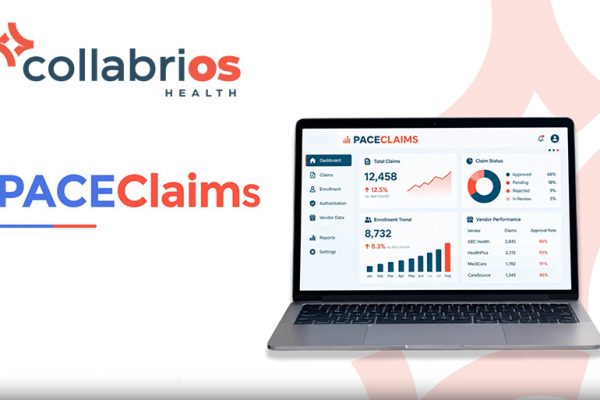
For PACE organizations, claims are more than a billing task. They’re one of the clearest levers a program has for financial control and audit readiness, and a claims approach built for PACE strengthens both.
Provider and plan at the same time
PACE serves adults 55 and older who meet their state’s nursing-facility level-of-care requirements, and most participants are eligible for both Medicare and Medicaid. A PACE organization receives a capitated payment for each participant and takes responsibility for coordinating and paying for all of that participant’s covered care, across its own clinicians and centers as well as specialists, hospitals, pharmacies and vendors. That makes it both an integrated care provider and a full-risk health plan.
[VIDEO: Collabrios Health PACEClaims explainer]
Every claim decision shapes margin and compliance
With fixed payment, the cost of care is where a program protects its margin. Accurate pricing, prompt payment and fast exception handling keep more resources available for participant care.
Oversight raises the stakes. CMS and state agencies oversee PACE, and audits are a regular part of operating a program. Organizations are strongest when they can show exactly how each claim was handled: what was decided, when, by whom and why.
Where PACE organizations see the biggest gains
The biggest opportunities usually sit where claims, authorizations, enrollment and vendor data meet. When that information lives in one place, teams spend less time reconciling records and can produce a complete audit trail on demand.
PACE-specific design matters, too. Claims processes built for Medicare Advantage or Medicaid don’t always account for PACE’s regulatory, workflow and pricing requirements, so it’s worth asking how any platform or administrator was built for PACE.
Who does what in PACE claims
- The PACE organization owns the participant relationship, the financial risk, the care model and regulatory responsibility.
- Claims administration, handled in-house or by a third-party administrator (TPA), does the work of processing and paying claims.
- The claims platform is the technology that makes that work accurate, efficient and traceable.
Getting the platform right strengthens the other two.
What a claims platform built for PACE delivers
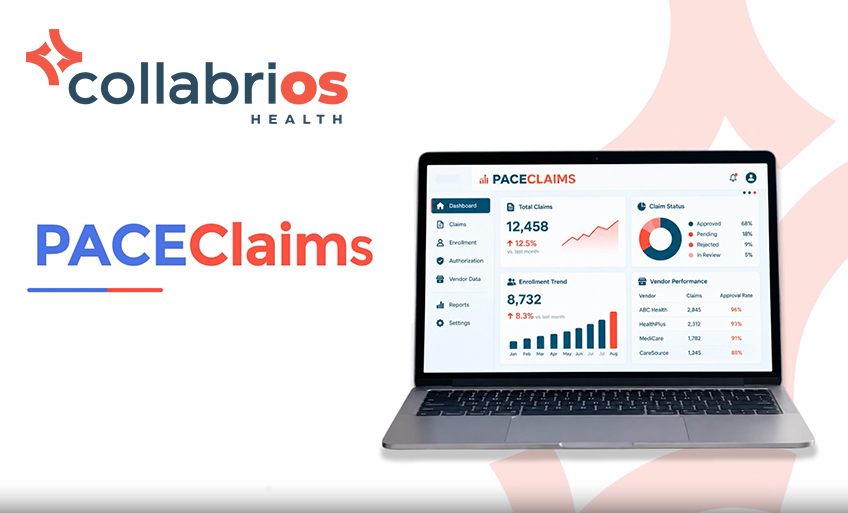
PACEClaims was designed around PACE from the start, and it serves as the claims engine within CollabriosONE.
- Faster, consistent processing: An automated rules engine prices every claim the same way, every time, and processes up to 99 of every 100 claims automatically.
- More capacity for exceptions: Real exceptions go straight to your team, so they’re resolved quickly instead of waiting behind routine work.
- Audit readiness built in: Every claim decision is documented as it happens, creating a complete audit trail across the claims lifecycle.
- Real-time visibility: Claims performance is visible as it happens, so teams can act early.
- Works with your EHR: PACEClaims is EHR-agnostic and connects to the clinical systems organizations already use.
PACEClaims also gives you a choice: use the platform to run your own claims operation, or rely on Collabrios for fully managed TPA services on the same platform.
Built on PACE claims experience
PACEClaims is backed by Collabrios Health’s TPA team, which brings more than 600 combined years of experience. Today that team serves 33 accounts and more than 10,000 participants, and TPA accounts have grown 129% [over what time period?].
See it with your own claims data
Schedule a 20-minute walkthrough to see how PACEClaims would handle your own claims data, with no commitment.